


Some experiences cannot be metabolized through language.
They live somewhere the verbal mind cannot reach — in the body, in image, in pre-verbal memory. The patient who can describe everything that happened to them but feels nothing while doing it. The reader who has spent years in talk therapy and is articulate about their own patterns but no closer to changing them. The person who knows exactly what is wrong and cannot, for that knowing, move it.
Art therapy is the discipline that meets these experiences where they are. Not as a substitute for talk therapy. Not as a substitute for medication or other clinical support when those are warranted. As a complement — and sometimes as the only modality that can reach the relevant territory. This piece belongs to the visual stream of creative practice, and it is the clinical application of the older lineage.
What Art Therapy Actually Is
The precision matters here, because the term is used loosely in places where it does real harm.
Art therapy is a clinical mental health profession. It uses art-making within a therapeutic relationship to support psychological, emotional, and physical well-being. The practitioner is a credentialed art therapist with masters-level training — in North America, credentialed by the Art Therapy Credentials Board (the designations are ATR and ATR-BC); in the UK, by the Health and Care Professions Council; comparable bodies exist in most countries. The training combines clinical psychology with extensive supervised practice in art-making as therapeutic medium.
This is not the same as an art teacher offering “art therapy” without the clinical training. It is not the same as a wellness practitioner running a paint-and-sip evening and calling it therapeutic. It is not the same as the self-led creative practice the previous post in this branch describes. All of those can be valuable in their own contexts. None of them is art therapy in the clinical sense.
The reason for naming the distinction directly is protection. Misrepresented “art therapy” services routinely take payment from people who genuinely need professional support and deliver something that is neither professional nor therapy. The reader who is considering this work for clinical concerns deserves to know which qualifications to look for and which to walk away from. (The broader practice of creative expression for self-discovery is its own valuable territory and is treated at length in the ancient-lineage piece earlier in this branch.)
How It Works: The Mechanisms
Three short paragraphs on what the practice actually does at a mechanical level.
Bypassing the verbal mind. Making accesses regions of the brain that speech does not. The right hemisphere, the pre-verbal storage of early memory, the somatic record of experience — all of these can be reached through image and material in ways they cannot be reached through language alone. This is why art therapy is especially effective with material that predates language (early childhood experience) and material that exceeds language (overwhelming experience the mind has stored without narrating).
Externalizing the internal. Putting an inner state onto a page makes it observable. The fear that was diffuse in the body becomes a specific image on a specific piece of paper, with a specific color and a specific shape. Once externalized, it can be examined, lived with, returned to, and worked through. The same internal state, kept internal, remains diffuse and unaddressable.
The body in the making. The somatic dimension of working with hands and materials is part of the regulation, not a side effect. Pressing pigment into paper, kneading clay, cutting paper for collage — these activities engage the nervous system in ways that pure cognitive processing does not. The practice is embodied. The integration that emerges from it is embodied for the same reason.
These three mechanisms are why art therapy reaches what talk therapy cannot. They are also why, for some clinical concerns, art therapy is not optional — it is the modality the underlying issue requires.
Conditions It Supports
The clinical evidence base.
Trauma and PTSD. Strong evidence for art therapy as part of integrative trauma treatment. The image work reaches material the verbal mind protects itself from, making integration possible without re-traumatization through forced verbal recall.
Anxiety and depression. Measurable reduction in symptoms across multiple controlled studies. The making lowers physiological stress markers in the session and accumulates benefits across weeks of regular practice. (The contemplative practices discussed in the beginner’s meditation guide work through related mechanisms and pair well with art therapy as parallel disciplines.)
Grief and loss. Particularly effective when words feel inadequate to the loss. The image can hold what speech cannot articulate, and the practice often gives mourners a way back into expression after periods of muteness.
Body image and eating-related distress. Image work is often more direct than talk for these concerns, because the underlying issues are themselves about image — internalized representations of the body that words approach indirectly and image approaches head-on.
Life transitions and identity work. Adolescence, midlife, post-illness, post-relationship. The visual work is one of the more reliable modalities for tracking who you are becoming when the verbal description has not yet caught up.
The list is not exhaustive. The research literature on art therapy continues to grow, with new applications regularly added — neurological rehabilitation, end-of-life care, family therapy. The breadth of conditions it supports is one reason the discipline has been expanding rather than contracting over the past several decades.
Working With a Therapist vs. Self-Led Practice
The honest distinction.
Working with a credentialed art therapist is warranted when the underlying concern is clinical — trauma that has not been worked with, persistent depression, eating-related distress, dissociation, severe anxiety, or any situation where the support of a trained professional is appropriate. The therapeutic relationship is part of what makes the work work; you cannot replicate it alone with a notebook.
Self-led creative practice can address the broader landscape of self-discovery and well-being without the same need for clinical infrastructure. Working through a difficult week through journaling and image. Processing a life transition through collage and reflection. Building a daily creative practice as part of an examined life. These are real territories and the work is real, but they are not the territories that require an art therapist.
The two are complementary, not competing. Many people work with an art therapist for a specific period or concern and also maintain a self-led creative practice as part of their ongoing life. Some people begin in self-led practice, surface material that they recognize needs more support, and seek a credentialed therapist to work with it. Movement in either direction is healthy.
The line worth holding clearly: if material surfaces in self-led practice that feels unsafe to be alone with, the next step is professional support, not more self-led work. The reader knows their own situation. Choose accordingly.
A Beginner’s Self-Led Practice
A starter protocol for the self-led version, with clear caveats.
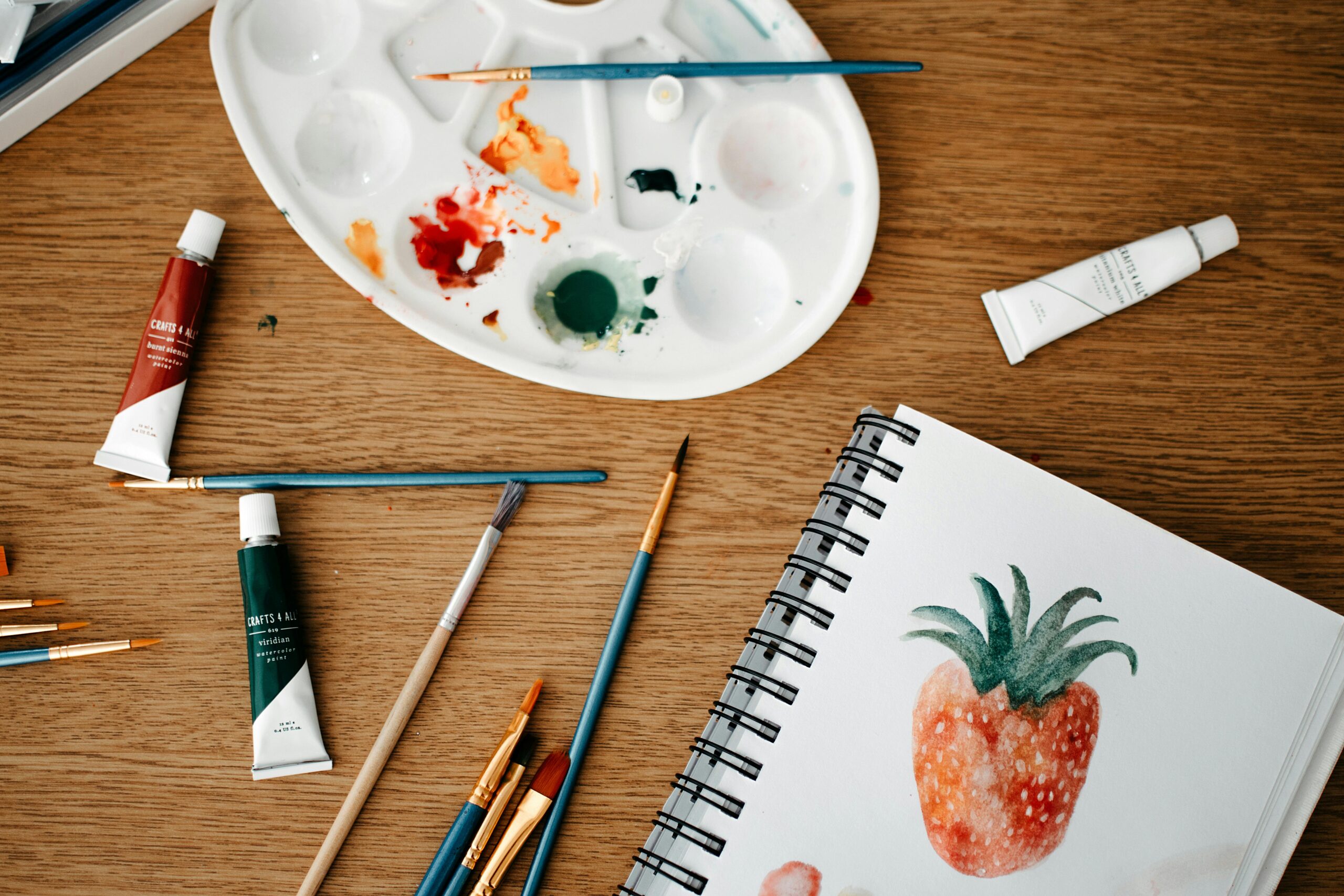
Set up. Fifteen minutes. Simple materials — paper, pencils, a basic watercolor set, or magazines and glue for collage. A private space where you will not be interrupted. Materials matter less than the protection of the time.
Prompt. Begin with a single question: what wants to come out today? Let the materials answer. Do not plan. Do not aim. Hold the question and let the hand move.
Restraint. Do not analyze the work while making it. Do not judge it during the session. Do not photograph it, post it, or show it to anyone. The making is the point. The product is private until you decide otherwise — and most of the time, you will not decide otherwise. That privacy is part of the practice.
Cadence. Three sessions per week for thirty days before evaluating whether to continue. The depth opens across weeks, not within a single session.
Caveat — read this. If material surfaces during the practice that overwhelms — distress that does not resolve in forty-eight hours, intrusive imagery that disrupts sleep, dissociation during the session, or any sense that the work has opened something you cannot hold alone — stop the practice and seek support from a credentialed art therapist or other appropriate professional. The self-led version is for ordinary inner work, not for clinical territory.
Closing
Art therapy reaches what other modalities cannot. For some readers, that means seeking a credentialed therapist. For others, it means picking up materials at home and beginning.
The discipline is the same. The making is the medicine. The recognition that the body holds what speech cannot say, and that image can reach where words cannot, is older than the formal profession and older than the contemporary research that documents it. The same recognition runs through the practice of storytelling for healing on the narrative side of this cluster — different modality, same insight. The reader who picks up a pencil tonight is joining a practice that has belonged to humans for as long as humans have been holding tools and looking at themselves.
Frequently Asked Questions
Yes — the research base is substantial. Controlled studies have shown measurable benefits across trauma and PTSD, anxiety and depression, grief, body image, and life transitions. The American Art Therapy Association and equivalent professional bodies maintain summaries of current research evidence. As with any therapeutic modality, effectiveness depends on the right fit between concern, therapist, and patient.
In North America, credentialed art therapists hold a master’s degree from an accredited program and are credentialed by the Art Therapy Credentials Board (ATCB) — the designations are ATR (Registered) and ATR-BC (Board Certified). In the UK, art therapists are regulated by the Health and Care Professions Council (HCPC). Comparable bodies exist in most countries. An art teacher or wellness practitioner without these credentials is not an art therapist, regardless of how their services are marketed.
The clinical practice of art therapy specifically requires a therapeutic relationship and cannot be self-led. What can be self-led is creative practice for self-discovery and ordinary inner work — visual journaling, intuitive drawing, collage. For clinical concerns (trauma, persistent depression, dissociation), self-led practice is not a substitute for professional support.
Regular talk therapy works primarily through language. Art therapy works through image and material, accessing regions of the brain that speech does not reach — the right hemisphere, pre-verbal memory, somatic storage. The two are often used together; art therapy is often a complement to talk therapy rather than a replacement.
Both. Art therapy is widely practiced with children, especially for processing difficult experience before full verbal capacity is available, but it is equally effective with adults. The clinical research on adult art therapy has been growing rapidly over the past two decades, with strong evidence for trauma, grief, anxiety, depression, and life-transition work in adult populations.