

The most persistent myth in creative culture is that structure and spontaneity are enemies.
That the disciplined creator and the inspired creator are two different people — and that if you want to be the second, you cannot be the first. That schedules flatten the spark. That the best work arrives unbidden, in the beautiful disorder of an unplanned afternoon, and that trying to manufacture the conditions for it will only produce something mechanical.
This myth survives because it contains a half-truth. You cannot schedule inspiration. But you can absolutely schedule the conditions in which inspiration is more likely to arrive — and if you are serious about a creative life, scheduling those conditions is the work. The professional creator is not the person who waits. It is the person who reliably shows up at the door.
Why Creatives Struggle Most With Routines
The resistance is not laziness. It is identity.
For many people, the sense of being a creative person is bound up with spontaneity — with the feeling of following where the work leads, making things when the feeling moves them, living with the kind of openness that a rigid structure seems to foreclose. A routine, in this framing, is something that belongs to the person with the spreadsheet and the five-year plan. Not the artist. Not the maker. Not the person who lives in feel.
The cost of this framing is high. Waiting for the feeling produces inconsistent output and a growing anxiety about the gap between the work you imagine and the work you are making. The feeling, it turns out, is not a reliable arrival. It shows up more reliably when you create the conditions for it — and less reliably when you wait.
The reframe: a creative routine is not a constraint on the work. It is the container that makes the work possible. The container does not compete with the contents. It is what lets the contents exist at all.
“You cannot schedule inspiration. But you can absolutely schedule the conditions in which inspiration is more likely to arrive — and that scheduling is the work.”
The Flexible Creative Routine Framework
The key is to fix the container and free the content. What this means in practice: the time, the space, and the ritual of beginning are consistent — but what you make within them remains entirely open.
Same time
Not because the clock is sacred, but because your body and mind begin to associate that time with a particular state. Show up at the same hour enough times and the friction of beginning starts to dissolve. The shift into creative mode becomes faster, more reliable, less dependent on motivation. This is the reason writers write in the morning and painters set up their easels at dusk — not superstition, but a nervous system that has learned when to open.
Same space
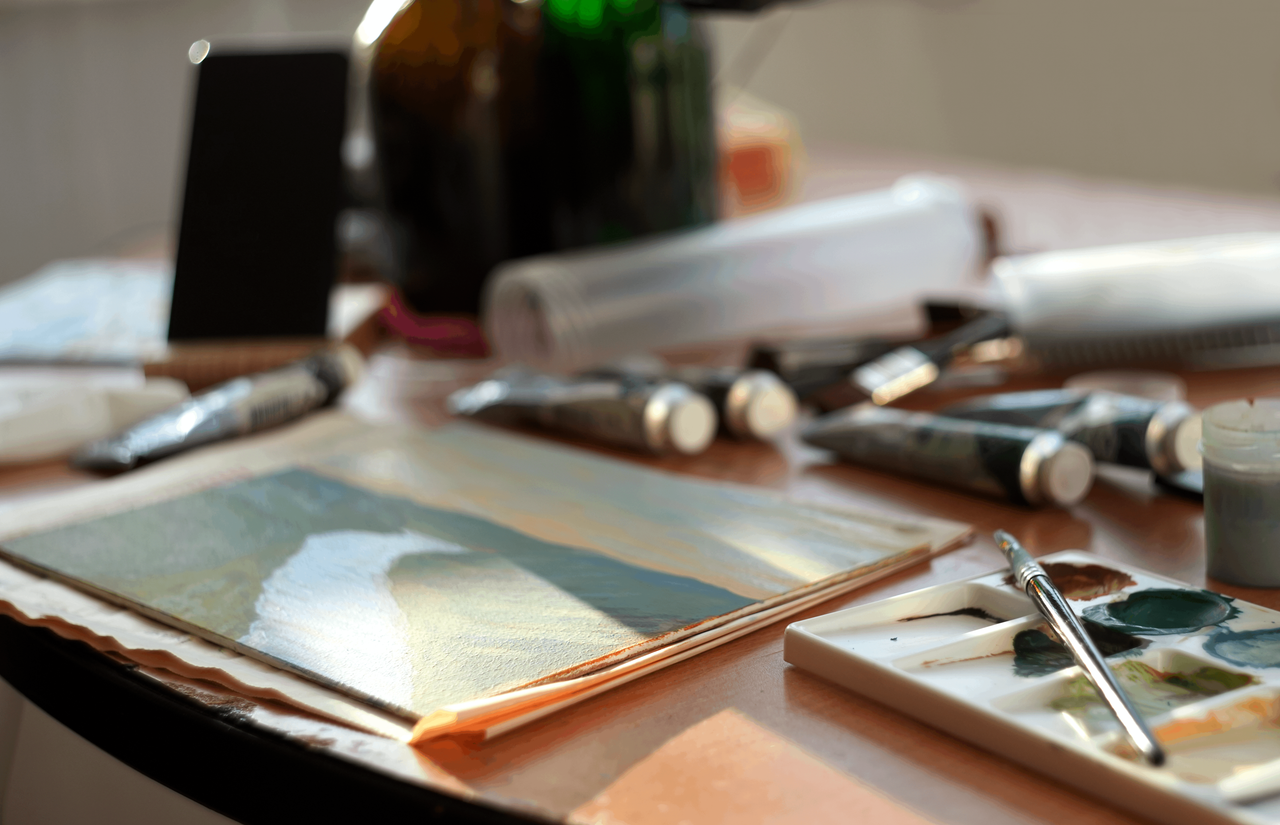
Environment is a powerful creative cue. A dedicated space — even just a particular chair, a cleared desk, a specific playlist — signals to your nervous system that the mode is changing. This is not precious ritual for ritual’s sake. It is neurological efficiency. The space does part of the work of beginning, so you don’t have to.
Variable intention
What you make, how you approach it, what comes through — this is where the spontaneity lives. The container creates the conditions; the content remains genuinely free. On some days the practice produces finished work. On others it produces an idea, a false start, a discarded page. The container does not judge which; it simply holds the door open.
Three Creative Discipline Practices That Actually Work
The daily minimum
Choose the smallest possible creative act that still counts — one paragraph, one sketch, one line of melody. The daily minimum is not about producing great work every day. It is about maintaining the thread of practice. On the days when more is possible, more will happen. On the days when it isn’t, the minimum keeps you in relationship with the work — and relationship, over time, is what the practice actually is.
The open file
Always have a project in progress that you are returning to, not starting. Beginning is the highest-friction state in any creative practice. A project already in motion eliminates that friction. The open file is not an obligation — it is an invitation. It sits there, and you return to it when you’re ready.
The collection habit
Creativity is fundamentally recombinative — it makes new things from what it has taken in. Treat the gathering of inputs as a creative practice in itself: images that stop you, phrases that land, observations worth keeping. The work you haven’t made yet is living in what you are collecting now.
The Container and the Contents
The final reframe is philosophical. Structure is not the opposite of spontaneity. It is the shape spontaneity needs in order to be repeated. A river needs banks to become a river. Take the banks away and you get water on the ground.
A creative routine, done well, is not a compromise with the artistic life. It is the artistic life, practiced consistently enough to be one. What you make inside the container will surprise you. That the container is there is what makes the surprise possible.
“Structure is not the opposite of spontaneity. It is the shape spontaneity needs in order to be repeated.”
A NOTE FROM THE EDITOR
-WELLthxology
I spent years believing that a real artist wouldn’t need a schedule — that the work would find me. It did, sometimes. It also missed me for weeks at a stretch. The day I built the container was the day the work stopped depending on my mood.
The Creative Outlets pillar carries this into practice — into permission for the reader who still isn’t sure they’re creative, into the origin-story work, and into the ancient traditions that got there long before productivity culture did.
Frequently Asked Questions
Only if the routine tries to schedule the content of the work rather than the conditions for it. A creative routine that fixes the time, space, and ritual of beginning — while leaving what you make entirely open — does the opposite of killing spontaneity. It removes the friction that stops it from arriving at all. Spontaneity needs a container to appear inside. That container is the routine.
The container helps most when the work is unpredictable. Fixed time and space create the reliable conditions in which unpredictable output is more likely to happen. The routine is not a promise about what will emerge; it is a promise about when and where you will be present enough to notice what does. Unpredictability is a feature of the work — not a reason to abandon the practice.
Shorter than you think. Fifteen to thirty minutes of protected, ritualised creative time — repeated daily — outperforms two hours once a week for almost every practice. The daily minimum keeps the thread alive; length is what expands on the days when more is available. Consistency of practice matters more than the length of any single session.
Miss days are part of the practice, not evidence against it. The rule is simple: return to the smallest possible version within twenty-four to forty-eight hours. Not a fresh start — a return. A daily minimum makes returning trivial, which is exactly why it belongs in every creative routine from the first day.
Morning pages, from Julia Cameron’s The Artist’s Way, is one specific implementation of a daily minimum — three longhand pages, first thing, no censorship. It is one of many valid forms of the daily-minimum principle. The framework in this essay is broader: any small, non-negotiable creative act, at a consistent time and place, functions the same way. Morning pages is a beautiful version of the practice. It is not the only one.